


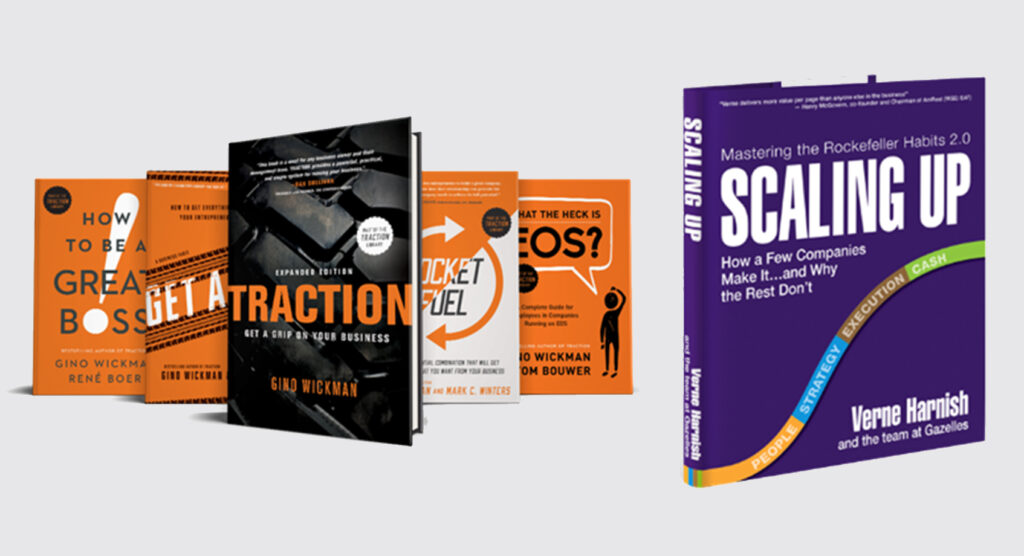
“Scaling Up” and “Traction” are two different methodologies or frameworks used by organizations to improve their performance, achieve their goals, and scale their operations. While both aim to enhance business effectiveness, they have distinct approaches and key principles. Here’s a brief comparison of the two:
Scaling Up:
Overview: Scaling Up, often referred to as the Rockefeller Habits or the Four Decisions Framework, is a methodology developed by Verne Harnish. It is designed to help businesses grow rapidly and sustainably by focusing on four key areas: People, Strategy, Execution, and Cash.
Key Focus Areas:
- People: Emphasizes having the right people in the right roles and nurturing a strong company culture.
- Strategy: Involves creating a clear and compelling company vision, setting priorities, and developing a strategic plan.
- Execution: Focuses on aligning teams, implementing processes, and using KPIs to execute the strategy effectively.
- Cash: Aims to improve financial management and sustainability.
Tools: Scaling Up provides tools and frameworks for activities such as one-page strategic plans, Rockefeller Habits Checklist, and the SWOT analysis.
Traction:
Overview: Traction is a framework associated with the Entrepreneurial Operating System (EOS) and was developed by Gino Wickman. It’s designed to help businesses gain control and achieve their vision by creating focus, discipline, and accountability within the organization.
Key Focus Areas:
- Vision: Clarifying the organization’s vision, including long-term goals, core values, and mission.
- People: Ensuring the right people are in the right seats, aligning their skills with the company’s objectives.
- Data: Using data to track performance and decision-making.
- Issues: Identifying and solving problems to eliminate obstacles.
- Process: Streamlining operations and improving efficiency.
- Traction: Executing on the vision through discipline and accountability.
Tools: Traction provides tools like the Vision Traction Organizer (VTO), Accountability Chart, and Scorecards to help organizations implement the framework.
Key Differences:
- Approach: Scaling Up focuses on the four key areas of People, Strategy, Execution, and Cash. Traction has a more comprehensive set of components, including Vision, People, Data, Issues, Process, and Traction.
- Philosophy: Scaling Up is more oriented toward helping companies grow rapidly, while Traction emphasizes the need for discipline and accountability to achieve an organization’s vision.
- Founders: Scaling Up was developed by Verne Harnish, while Traction is associated with Gino Wickman.
Both Scaling Up and Traction have been adopted by various businesses and can be effective, but the choice between them depends on an organization’s specific needs, culture, and growth goals. Some organizations may even choose to integrate elements from both frameworks to create a customized approach that suits their unique circumstances.